
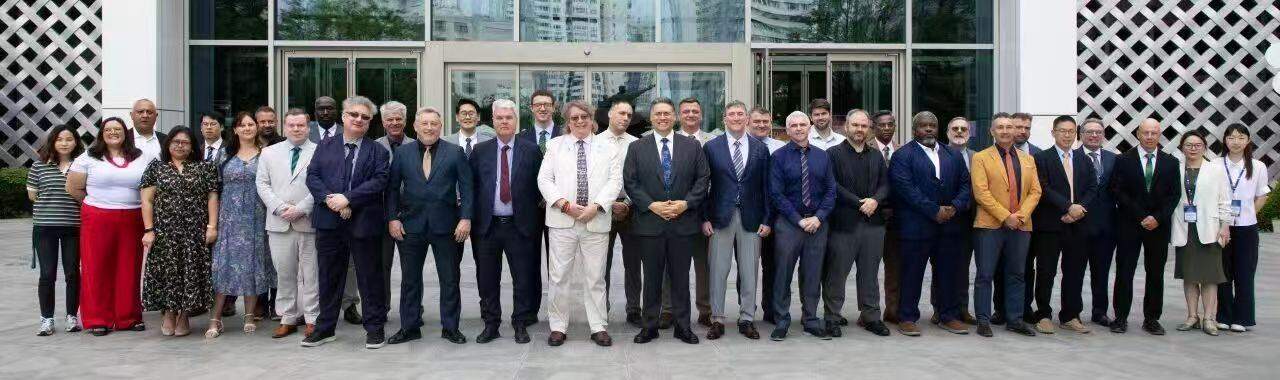
On June 12–13, 2026, center principals from the international curriculum centers of more than 20 schools across China gathered at Shanghai Film Plaza for Dipont’s second National Center Principals’ Meeting of the year. The meeting was led by Dipont’s education and academic quality management (AQM) team.
Over two days, the group discussed trends in international education in China, English language support, teacher development, university guidance, teacher recruitment, and learning in the age of AI.
Preparing for a changing landscape
Stephen Fulton, Director of Education for Dipont’s high school programs, opened the meeting and thanked principals for their continued commitment. Deputy Director Leo McArdle then looked at the trends shaping the centers’ future: demographic change, a shifting international context, evolving expectations among families, and a wider range of English levels and learning backgrounds among students. Principals discussed admissions criteria, English assessment, English support and how to build a strong English-speaking environment on campus.
Strengthening university guidance
Working in groups by curriculum, principals shared the latest trends in university applications, from popular study destinations and subject choices to changing application strategies. They also exchanged practical experience on writing reference letters, setting predicted grades and giving students individual guidance.

Teaching quality and teacher growth
Nasser Lone, Center Principal of the A-level Center at Nanjing Jinling High School, described the center principal’s role in assuring teaching quality, leading academic work and running a center, and how professional development and careful management can keep improving classroom practice. Principals then discussed how to link teachers’ annual evaluation reports and personal goals with center goals and Dipont’s support system.


Supporting students’ English
With students’ English levels and backgrounds continuing to change, principals shared approaches to assessing English, tracking progress, training teachers, differentiating teaching and monitoring results, all aimed at strengthening English as an Additional Language (EAL) support so students can thrive in an international curriculum.

Building a strong teaching team
Recruitment Manager Robin Watts updated principals on recruitment. Demand for bilingual teachers continues to grow, and changes across the international education sector are creating new opportunities to bring talented teachers into Dipont’s centers.

Learning in the age of AI
Neng Tsao, MBA Program Director at Fudan University School of Management, introduced Fudan’s Global MBA program and its approach. Leo McArdle then led a discussion on education in the age of AI, starting from the historic debate over calculators in the classroom. As AI changes how students find information and solve problems, he argued, schools must make sure students still master the foundation skills of each subject, while placing greater weight on judgment, critical thinking and the ability to apply knowledge in new contexts. Assessment, too, needs to focus more on students’ real understanding and thinking.


Competitions and activities
The AQM team reviewed the past year’s academic competitions and student activities across the centers, and set out plans for English, humanities, mathematics and science in the year ahead. These activities give students a platform to develop and shine, and help centers share teaching ideas and resources.

Closing the meeting, Stephen Fulton thanked the administrative team for their support, wished everyone a wonderful summer break and set out priorities for the coming year.


